Fr. Billuart’s argument on whether the Holy Spirit can be distinguished without a procession.
- Oct 9, 2025
- 9 min read
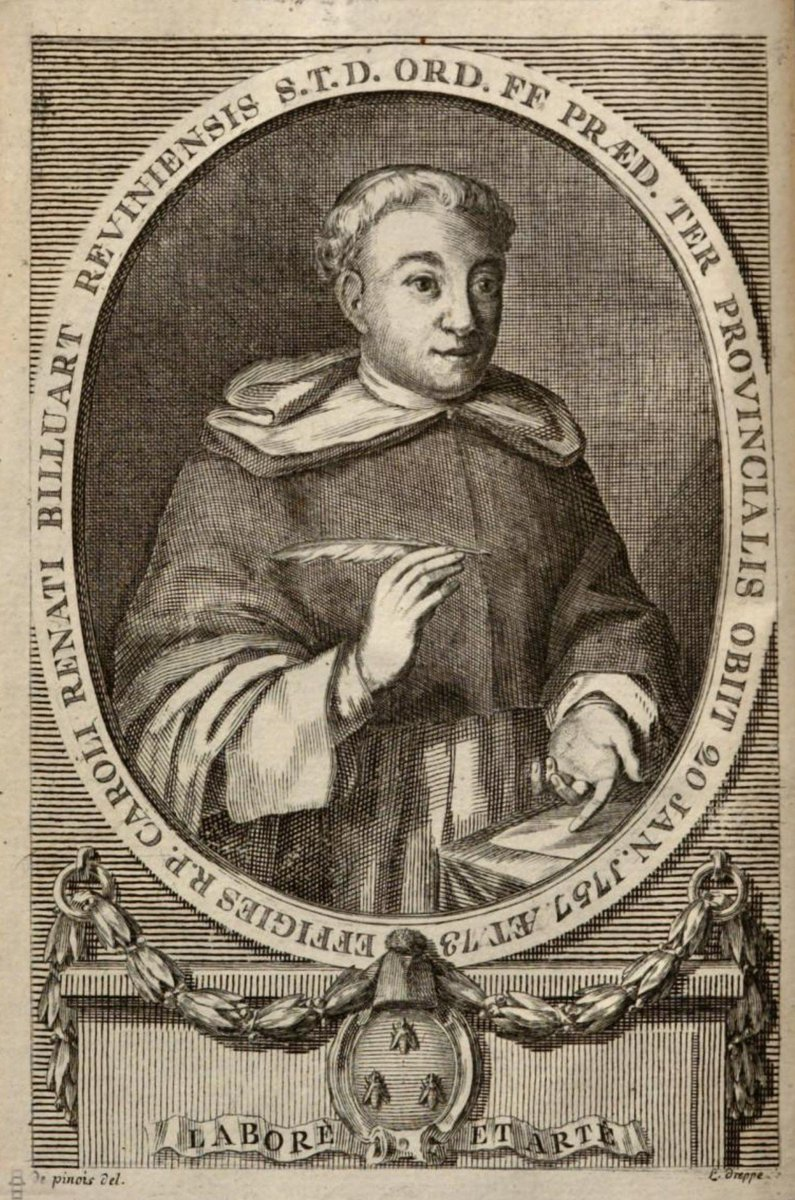
If the Son doesn’t possess active spiration, He and the Spirit wouldn’t be distinct.
Arg 1 is from the Fathers and the Councils: Gregory of Nyssa, Book 1 Contra Eunomium: “If the principle of origin is removed, the Holy Trinity doesn't differ from itself in any way.”. St. Augustine, tractate 39 on John: “They indicate number only by their relation to one another”. Fr. Henno’s interpretation of Second Toledo 675: “they [the person’s] are related to one another through disparate relations is forced; for no one would say that disparate relations, such as paternity and likeness, are related to each other.” St. Anselm, On the procession of the Holy Spirit, ch. 3: “The aforementioned opposition of relation, which arises because God is from God in the 2 aforementioned ways, prevents the Father, the Son and the Holy Spirit from being predicated to one another, and from having properties of one attributed to the others.” also “All things in the divine are one where the opposition of relation of relation does not stand in the way.”
Disparate relations aren't related to one another in any way, unlike the counterpart named relation of opposition, which is how Thomists distinguish the Son and Spirit. Scotus and his followers and the Eastern “Orthodox” use disparate opposition to substantiate that the Son and Spirit can be distinguished regardless of whether the Son has Active Spiration.
Arg 2 by reason: The persons are distinguished by the opposition of relation, the opposition of relation is founded on the processions of the Persons. Therefore, if the Holy Spirit didn't proceed from the Son, He wouldn't be relatively opposed to Him, which also leads to the inference that the 2 persons wouldn't be distinguished from each other. The schools that follow the Thomist tradition all accept this premise, which is drawn forth from Boethius’ book on the Trinity and St. Anselm’s book on the procession of the Holy Spirit: “In God, all things are one where the opposition of relation doesn’t stand in the way.” In God, there's nothing besides essence, attributes, and relations. The persons all agree on their essence and attributes by which they are identified because of God’s supreme simplicity. Therefore, they are distinguished solely by their relations insofar as nothing is referred to as itself. The minor premise is established and admitted because God being the most simple being, admits no distinction nor opposition except that which can not be removed and this is founded in origin since the same cannot proceed from itself.
Scotist arg 1: Reject P1, substantiation to rejecting P1: the commonly accepted principle is opposition of relations (whether relative or disparate), but not that it's always relative affirm that the opposition of relations and relative opposition are 2 different things. Fr. Henno in his Disputation 1. 4. 10 states that “relative opposition is the repugnance found between 2 relations that mutually regard each other,” i.e. paternity, filiation. Disparate opposition, on the other hand, is “the repugnance found between 2 relations, one of which, by its formal reason, isn't really the other even if they don't regard each other
Scotist arg 2: If disparate relations arent compatible in the same suppositum, nor do they constitute distinct persons (i.e. paternity and active spiration). Fr Henno hold that paternity and active spiration arent incompatible in the same person, but filiation and passive spiration are incompatible and require 2 distinct persons. Their argument goes as such: “it implies that the same person is produced by 2 total productions, which would happen if one person had both filiation and passive spiration, since it would be the terminus of generation and spiration.” It doesn’t imply that the same person has 2 total actions for 2 effects, like how the same man can will, understand, hear, see, generate etc. All which are total actions.
Against 1: This formulation doesn’t match with the writings of St. Gregory of nyssa, St. Anselm, Council of Florence etc. According to whom the relation of origin or procession ALONE multiplies the persons. The Fathers and Theologians all unanimously concede that the persons are distinguished by opposition and not disparate. Imagining a disparate opposition is abusing terms against common sense and abuse the notion of things. Disparate things are those which aren’t opposed, because if they were opposed then they wouldn't be disparate i.e. white and hot are disparate because they aren't opposed, in contrast to white and black which aren't disparate because they are opposed.
Against 2: 2 disparate relations aren't compatible in the same person, and don't arise from the nature of the relation itself. A relation of itself isn't incommunicable except with its correlative term, with which alone it has relative opposition. This incompatibility solely arises from the fact that they aren't in the same subject, or that they don't have the same being. Still, each has its own limited and divided being (as is clear in created disparate relations), although they aren't relatively opposed by relation and term, they are distinguished as 2 limited accidents having diverse being. In God, relations don't have limited and diverse being since they're identified in the same essence,e nor do they have diverse subjects since they're not accidents. Therefore, they cannot be really distinguished except by relative opposition, and the thesis confirms that the notion of disparity isn't proper to relations but also applies to absolutes. Now, absolute disparate things which by reason of their limitation are really distinct in creatures, i.e. mercy, justice, wisdom, are infinite beings due to them not being relatively opposed.
Against 3: The Scotists beg the question when they say that if the Holy Spirit didn't proceed from the Son as well they’d be really distinct regardless because they're would be 2 total productions that are really distinct which implies that the same person is produced by 2 total productions. By begging the question they beg the principle and prove the same by the same, for there arent 2 total productions really distinct insofar as there are 2 termini (or 2 persons) really distinct, since the production of a person is the person in the act of being made. Therefore, proving there are 2 persons really distinct because there are 2 really distinct productions is just saying “there are 2 persons because there are 2 persons”. Therefore it falls onto the Scotists that there are 2 really distinct persons apart from the distinction of a double total production.
Thomists say that generation and inspiration would be one and the same total production, formally and eminently generative and spirative, only virtually and conceptually distinct. For example, in the Father, intellect and will are the same entity, yet virtually distinct. Likewise, generation and active spiration are the same entity, virtually distinct, so the Holy Spirit would be the same person who, insofar as He proceeds through the intellect, would be called the Son and, insofar as he proceeds through the will, would be called the Holy Spirit. Just as now, one and the same person, insofar as He produces through the intellect, is called the Father, and insofar as he produces through the will, is called the Spirator.
Henno’s objection: the existence or absence of fecundity in the Son for spirating cannot make generation and active spiration, which are in the Father 2 or 1. Even if the Son were fecund or unfecund for spirating, the generative and spirative power in the Father remains the same, and consequently, the same generation and spiration.
Response: The Question here isn't about generation and active spiration in the Father; all theologians acknowledge that there aren't two actions in the Father really distinct since they aren't correlatively opposed to each other, otherwise they’d end up constituting different persons. The true question is about generation and passive spiration, which Thomists say would then be one and the same production, which is only virtually distinct. Which is why Thomists deny the antecedent, for from the fact that the Son isn’t fecund for Spirating the Holy Spirit, He is not relatively opposed to Him, therefore He isn't a person distinct from Him but rather one and the Same person under diverse aspects of being begotten and spirated, and consequently not a double production but one and the same total production terminating in him. When he adds that same generative and spirative power remains, and therefore the same generation and spiration; we distinguish: the same generation and spiration remain entitatively we concede, terminatively we deny.
Objection 1: Henno: St. Anselm teaches that the Son and Holy Spirit are precisely distinguished from one another by the Son being born through the intellect and the Holy Spirit proceeding through the will. He says: “Indeed, the Son and the Holy Spirit have their being from the Father, but in different ways, because one is born and the other proceeds… And therefore even if they were not many through anything else, they would be distinct through this alone”. St. Augustine, de trinitate, book V, ch. 14. “The Holy Spirit isn’t the Son because He proceeds not as one born, but as one given”. St. John Damascus gives a similar testimony in his works on the orthodox faith, book 1, chapters 7 & 9.
Billuart: I assume that Scotists won't deny that Anslem doesn't contradict himself. In that Same work, the Thomistic thesis is asserted and vindicated. Therefore, the words objected aren't to be understood in the same sense that Scotists understand them nor does Scotus seem to place much of his trust in them, as we see in his book 1, distinction II, question 2 “I do not wish to dwell much on his [Anselm] intention”. Thus, a 2-fold response is given to this objection drawn from St. Anselm. The first is that of St. Thomas: St Anselm spoke according to the opinion of the Greeks, explaining how they distinguished the Holy Spirit from the Son in reality. Hence, the words of St. Anselm cited are more of a disputative supposition than a definition of the truth. The second is that St. Anselm truly said that the Holy Spirit is distinguished from the Son because He proceeds through the will. For by the very fact that He proceeds through the will, he necessarily proceeds from the Son, because the will is common to the Father and the Son and also because it’s been said that love proceeds from the Word. This is how St. Augustine and St. John Damascene are to be understood.
Scotists will press further based on what St. Anselm adds: “For if they were not many through anything else, they would be distinct through this alone.”
Response 1: Deny the minor premise. For St. Anselm is speaking of origins according to the concept of origin and the way. Besides this, there are relations and notional properties in the state of being. Therefore, St. Anselm thinks that, if by impossibility the Holy Spirit didn't differ from the Son through relations and notional properties in the state of being, He would still be distinguished from Him through origin in the concept of origin and the way, although in reality its impossible for this to exist without the other.
Objection 2 with the same: What constitutes one thing distinguishes it from every other. But filiation constitutes the Son, therefore, it also distinguishes him from every other and consequently the Holy Spirit.
Response 2: Distinguish the major premise. What constitutes one thing distinguishes it from every other distinct or distinguishable thing, I concede; from every other non-distinct thing or non-distinguishable thing, I deny. Example, rationality, which constitutes man, distinguishes him from every other distinct thing, but it doesn't distinguish him from the animal, which is identified with man. Paternity constitutes the Father, and yet it doesn't distinguish him from the Spirator, due to him being identified with the Father. Hence the suppositum of the consequent must be denied, namely, the Holy Spirit exists as a person distinct from the Son. For then there would not be one and another, but the same person of the Son and Holy Spirit under the diverse aspects of being begotten and spirated
Objection 3: In the hypothesis, the Son would still proceed through the intellect and the Holy Spirit through the will. This is how they would be distinguished
Response 3: Through this, they would be distinguished virtually and conceptually, I concede; really, I deny. Just as the intellect and will in God are distinguished only virtually, so the procession through the intellect and will are distinguished only virtually on this basis. Hence, in the Father active generation, which is through the intellect and active spiration, which is through the will, are virtually distinguished; therefore, generation and passive spiration are distinguished virtually. Unless something else is added by which they are distinguished really. This ‘something’ cannot be anything other than the origin of one from another (relative opposition)
Objection 4: If HS proceeded from the Son alone, he would still be distinct from the Father. Therefore, if he proceeded from the Father alone, he’d be distinguished from the Son.
Response 4: Antecedent granted, consequent denied. The disparity is that in the case of the antecedent, the Holy Spirit would still proceed mediately from the Father, namely, through the spirative power which He communicates to the Son, and thus with the between the Father and the Son there would be sufficientrelative opposition for distinction. In the case of the consequent, the Holy Spirit would proceed neither mediately nor immediately from the Son.
Instance: The divine essence gives the Father generative power, and yet He is not thereby mediately opposed to the Son. Therefore, although the Father gives the Son spirative power, He wouldnt be mediately opposed to the Holy Spirit in the hypothesis.
Response 5: Deny the Consequent, the disparity is that generative power is from the essence, not through real procession and opposition with the Father but rather through virtual emanation. Hence, its not surprising that if He isnt mediately opposed to the Father, He isnt mediately opposed to the Son. But since the Father gives the Son spirative power through real relative procession with Him. Therefore, since He’s immediately opposed to the Son, Hes mediately opposed to the H.S proceeding immediately from the Son.
God Bless, add me on my socials if you have any questions or want to get in touch

Comments